Comparative analysis of habitat-adapted symbionts

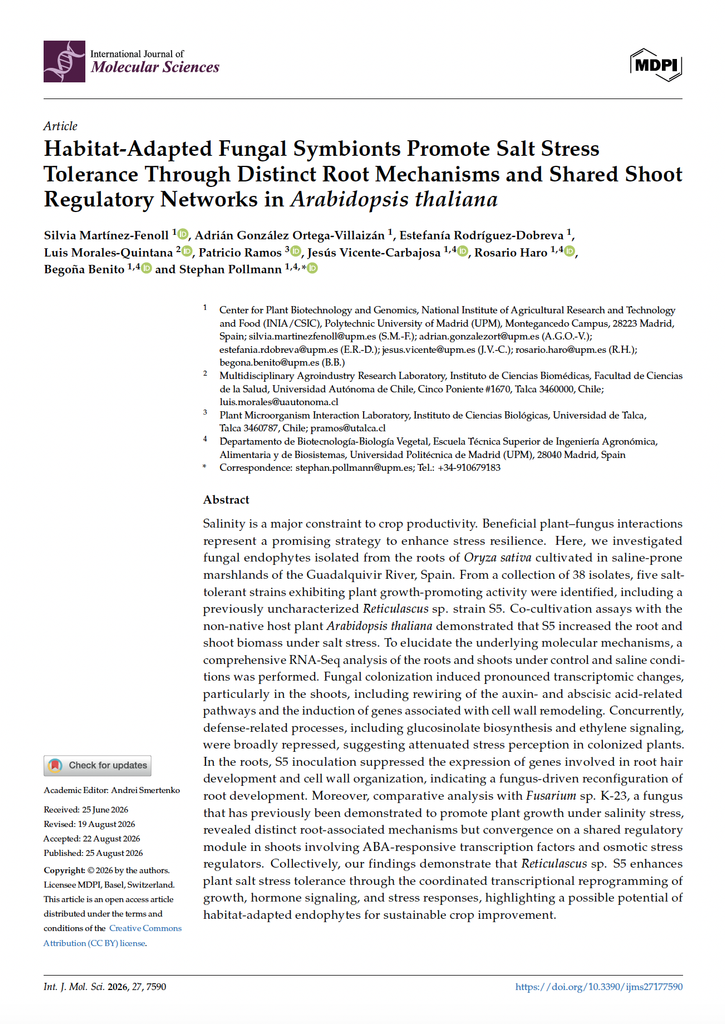
We are pleased to present our recent study on the comparative molecular analysis of two habitat-adapted fungal symbionts that enhance salt stress tolerance in Arabidopsis thalina plants. This publication marks Silvia’s debut as the first author and showcases her research conducted over more than a year. We are thrilled that the paper has been featured in the Special Issue celebrating the 25th anniversary of the International Journal of Molecular Sciences.

Martínez-Fenoll et al. 2026 International Journal of Molecular Sciences
Synopsis
Salinity is a major constraint to crop productivity. Beneficial plant–fungus interactions represent a promising strategy to enhance stress resilience. Here, we investigated fungal endophytes isolated from the roots of Oryza sativa cultivated in saline-prone marshlands of the Guadalquivir River, Spain. From a collection of 38 isolates, five salt-tolerant strains exhibiting plant growth-promoting activity were identified, including a previously uncharacterized Reticulascus sp. strain S5. Co-cultivation assays with the non-native host plant Arabidopsis thaliana demonstrated that S5 increased the root and shoot biomass under salt stress. To elucidate the underlying molecular mechanisms, a comprehensive RNA-Seq analysis of the roots and shoots under control and saline conditions was performed. Fungal colonization induced pronounced transcriptomic changes, particularly in the shoots, including rewiring of the auxin- and abscisic acid-related pathways and the induction of genes associated with cell wall remodeling. Concurrently, defense-related processes, including glucosinolate biosynthesis and ethylene signaling, were broadly repressed, suggesting attenuated stress perception in colonized plants. In the roots, S5 inoculation suppressed the expression of genes involved in root hair development and cell wall organization, indicating a fungus-driven reconfiguration of root development. Moreover, comparative analysis with Fusarium sp. K-23, a fungus that has previously been demonstrated to promote plant growth under salinity stress, revealed distinct root-associated mechanisms but convergence on a shared regulatory module in shoots involving ABA-responsive transcription factors and osmotic stress regulators. Collectively, our findings demonstrate that Reticulascus sp. S5 enhances plant salt stress tolerance through the coordinated transcriptional reprogramming of growth, hormone signaling, and stress responses, highlighting a possible potential of habitat-adapted endophytes for sustainable crop improvement.